
Deep Tech high stakes, higher reward
The highest potential to create long-term value for the environment, economy & society
Only deep tech can solve the real problems of today
Deep tech is built on deep scientific foundations, using innovations in physics and materials to solve highly complex problems. The products and systems that have most impacted modern life can all be traced back to deep tech. Likewise, the human desire for continuous improvement, progress, and growth requires deep tech innovation.
Industries that use deep tech are challenging to build, nurture, and transform. Corporate developers, who are dependent on global partnerships, must face geopolitical conflicts and unpredictable supply chains, and companies of all sizes require intense labor over long timelines to reach the market and positively impact society. This is only made possible by a broader ecosystem of enablers—the innovation stakeholders.
The complexity of deep tech requires that innovation stakeholders understand the system, how to navigate it, and how to support and influence its development. With the right connections and insights, policymakers can design and execute plans that align with specific challenges and geopolitical risks. NGOs can influence the direction the technology takes and how it impacts society and the environment. Investors can create risk-aware strategies to optimize their investment choices. And educators can integrate current global realities into curricula to strategically develop and prepare students for tomorrow’s industries.
The real problems of today—climate change, energy transition, healthcare equality, food insecurity, and resource scarcity—can only be solved with deep tech. Deep tech has the potential to transform every aspect of our lives and create long-term value for the environment, economy, and society.

Balance is critical — no one can do it alone
A community with diverse, specific & complex stakeholder needs creates stability
International partnerships & cross-culture collaboration
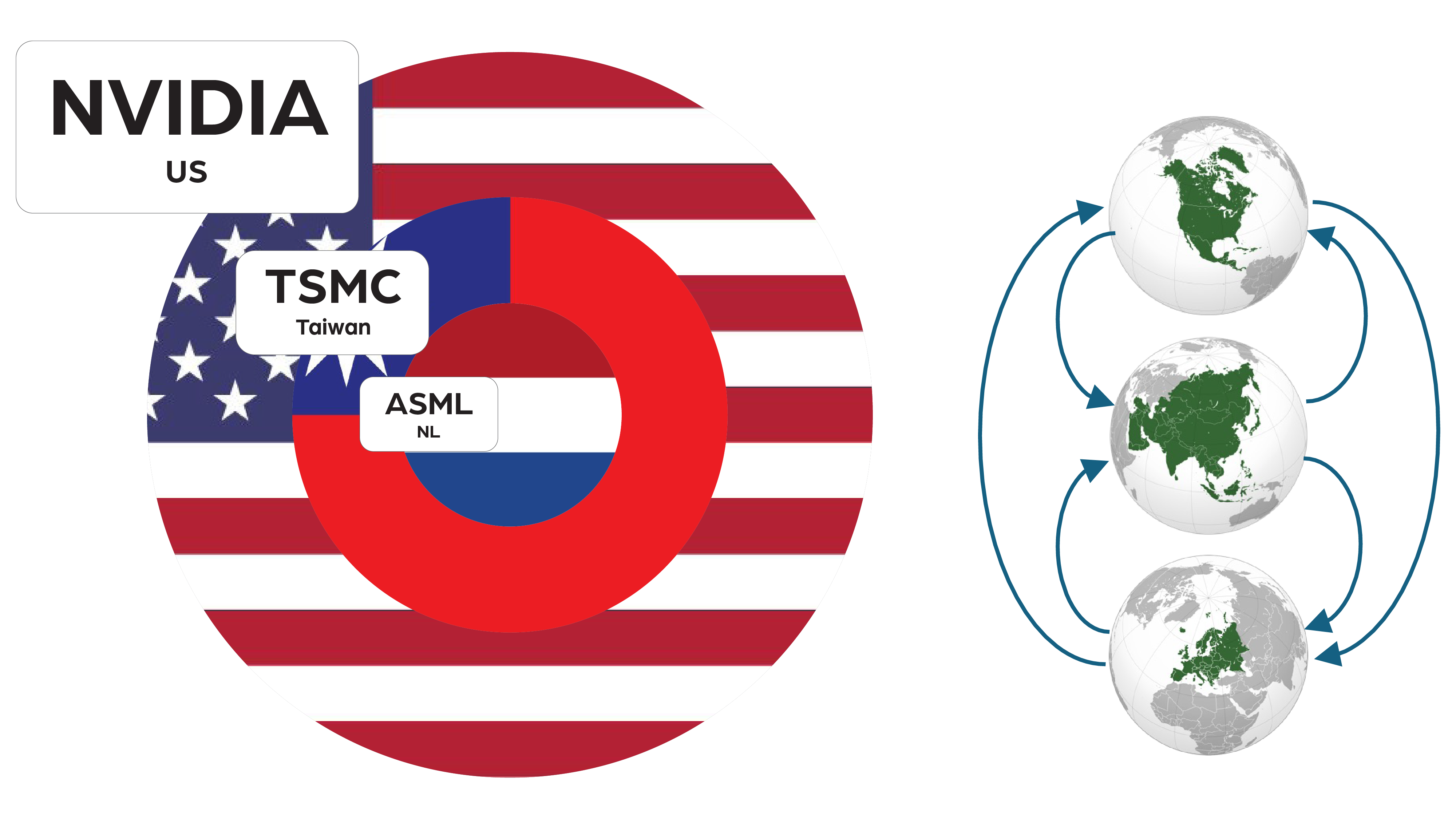
The most significant progress we have achieved over the past several decades has been enabled by the exponential growth of semiconductors. Technologies, enabled by semiconductors, drive the global economy, and the semiconductor industry illustrates the interconnection between global players.
Nvidia, the most valuable company in the world, spends half of its expenditures on semiconductor manufacturer, TSMC, which spends half of its expenditures on the Dutch semiconductor innovator, ASML. This illustrates the interdependent connections across continents and cultures that enable societal progress and global economic growth. These connections and partnerships between systems are critical for achieving meaningful change.
And cultural distinctions must not be ignored. They can exist across borders, but also between sectors. To reach common goals, diverse stakeholders need a shared language and common framework in which to collaborate. When complex, specialized systems create complementary partnerships, interdependent connections lead to efficiency, peace, and global stability.
High Tech Campus 37
5656 AE Eindhoven
The Netherlands